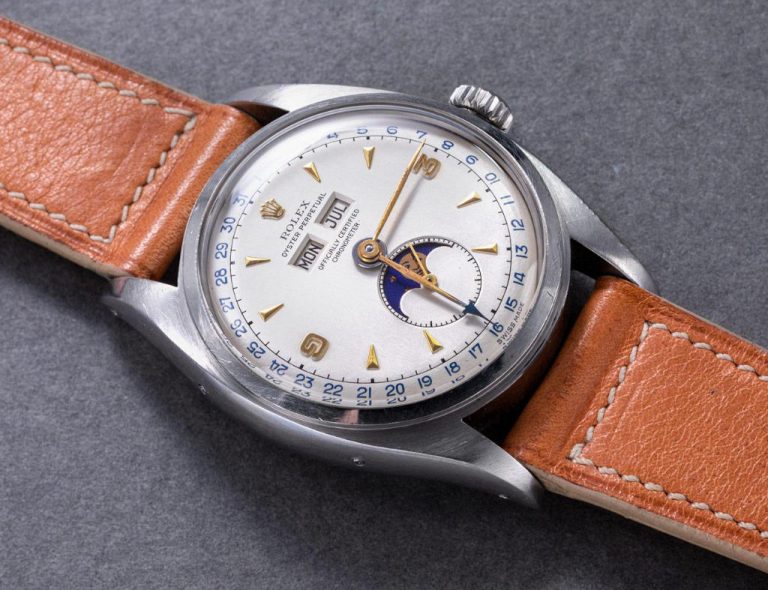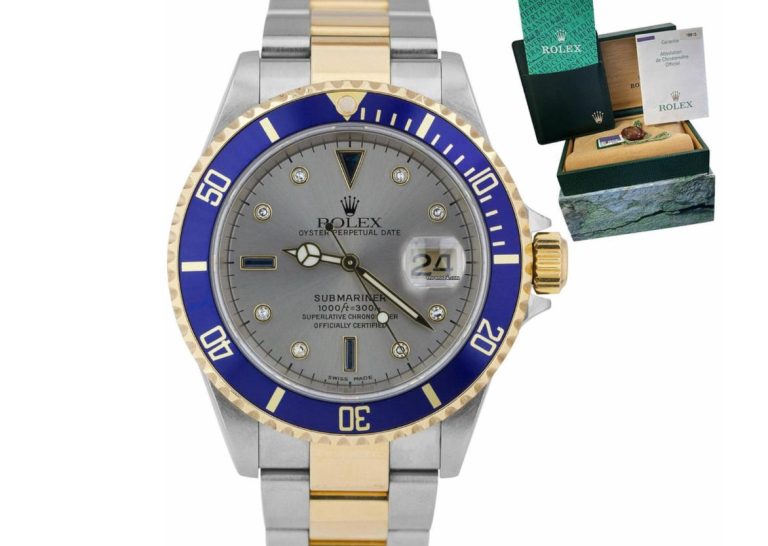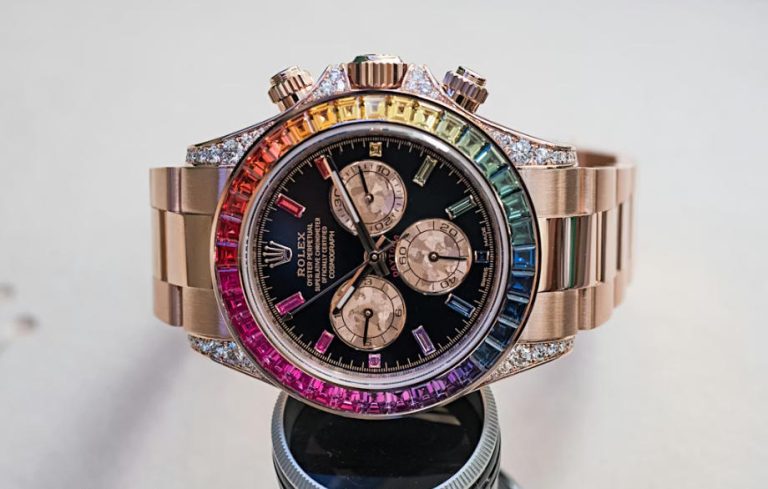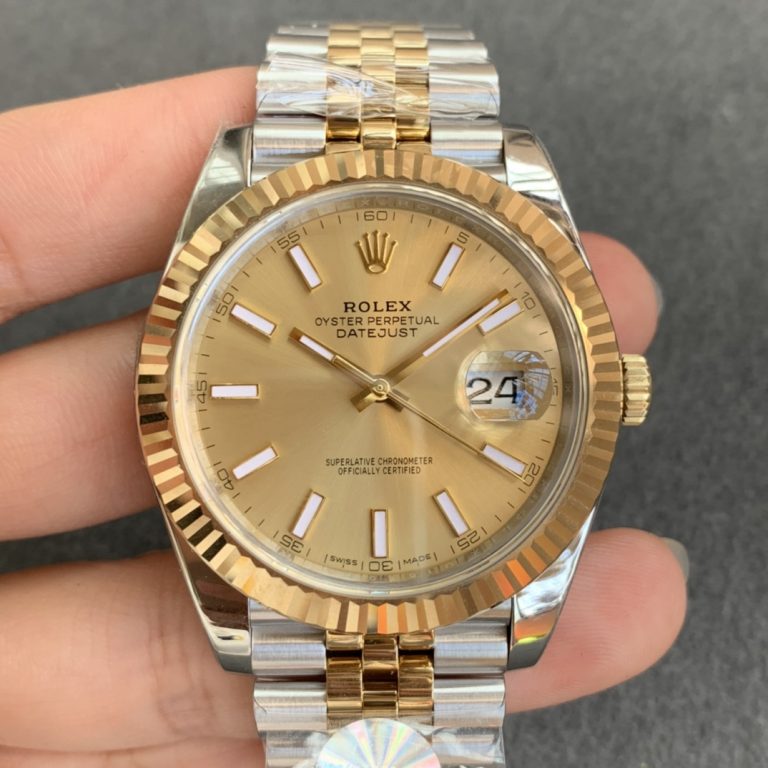
Two watches can share the same Datejust 41 outline and still create very different impressions. The golden versions discussed here are useful because they show how colour, dial treatment and surface finishing can change the character of a familiar Rolex design. Instead of ranking factories or declaring one version universally superior, it is more useful to compare the parts that actually affect what the watch looks like on the wrist.
| Comparison point | What to inspect | Why it matters |
|---|---|---|
| Bezel | Thickness, polish and transition into the case | A heavy bezel can make the dial look too small |
| Dial | Marker spacing, date-window depth and surface reaction to light | Small spacing errors change the whole face |
| Bracelet | Gold tone, end-link fit and clasp tension | The bracelet is handled more than any other part |
| Movement | Crown action, date change and serviceability | Practical behaviour is more useful than a factory label |
Shared architecture does not mean identical execution
The Datejust 41 has a recognisable formula: a relatively broad dial, prominent bezel, Oyster style case and a bracelet that carries a large part of the watch’s visual identity. Gold coloured versions add another variable because polished surfaces catch light much more aggressively than steel. Small differences in tone or polishing can therefore become obvious.
Start with the case and bezel before looking at the movement. A bezel that is too thick can reduce the apparent dial size. A bezel that is too shallow can make the watch look flatter than intended. The transition from bezel to mid-case should look deliberate rather than rounded off by excessive polishing.
The dial and bracelet decide whether the watch feels coherent
One dial may make the gold case feel formal while another pushes the watch towards a more contemporary look. The important details are the contrast between dial and markers, the depth of the date window, the shape of the hands and the amount of negative space around the applied furniture. Sunburst or metallic dials also reveal finishing under changing light; a convincing surface should move gradually from bright to dark as the watch is tilted.
The bracelet provides the practical comparison. Link articulation, edge finishing, clasp tension and the fit of the end links determine whether a watch feels solid or merely looks good from the front. Gold coloured centre links are particularly revealing because scratches and uneven coating become noticeable faster than on brushed steel.
A more useful way to compare Datejust replicas
Movement descriptions deserve context. A movement can be visually arranged to resemble a Rolex calibre without reproducing every technical feature. Reliability, serviceability and correct external behaviour are more useful than marketing terms. The date change, crown action and hand setting should be assessed as functions.
Readers following the model can find more examples in our Datejust replica coverage. Ibis Watches treats these two golden Datejust 41 versions as a case study in how case, bezel, bracelet and dial have to work together rather than as a contest between factory names.
About the Author