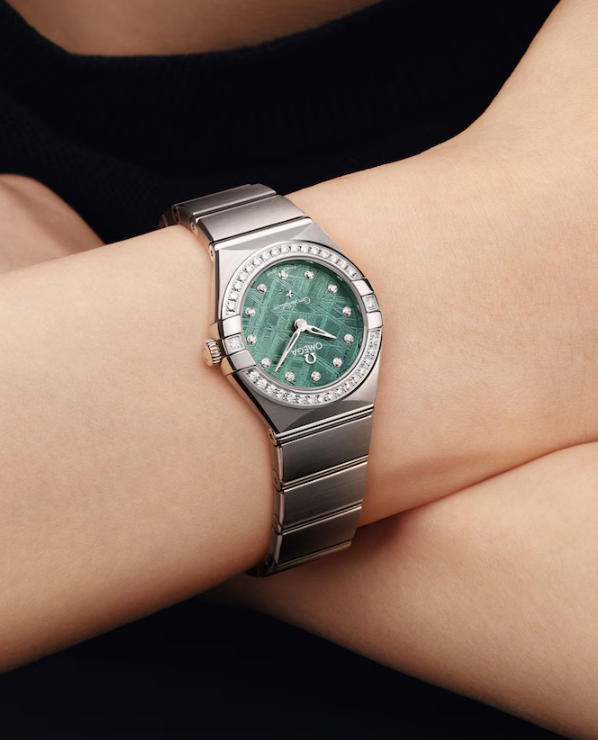
Omega Constellation Brings Jewellery Character Back to a Familiar Watch
The Omega Constellation has always sat somewhere between a traditional watch and a piece of jewellery. It is easy to recognise because of its claws, polished bracelet and familiar star at 6 o’clock, yet the collection has never been tied to one fixed personality. Some versions feel restrained and practical, while others are clearly designed to make more of an impression on the wrist.This new group of 20 references leans much further into the decorative side of the Constellation. Smaller cases, textured dials, polished metal and diamond details give the watches a stronger jewellery character, but Omega has been careful not to lose the design language that makes the collection recognisable.That balance is what makes these watches more interesting than the headline first suggests. They are not simply 20 colour variations of the same model. The size, movement, material and dial treatment all change the way each version feels.For readers exploring replica watches in the UK, the Constellation is also a useful reminder that simple looking watches are often the hardest to reproduce convincingly. There are fewer obvious distractions, so the quality of the proportions, bracelet fit and dial finishing becomes much easier to see.
Three Sizes Create Three Different Experiences
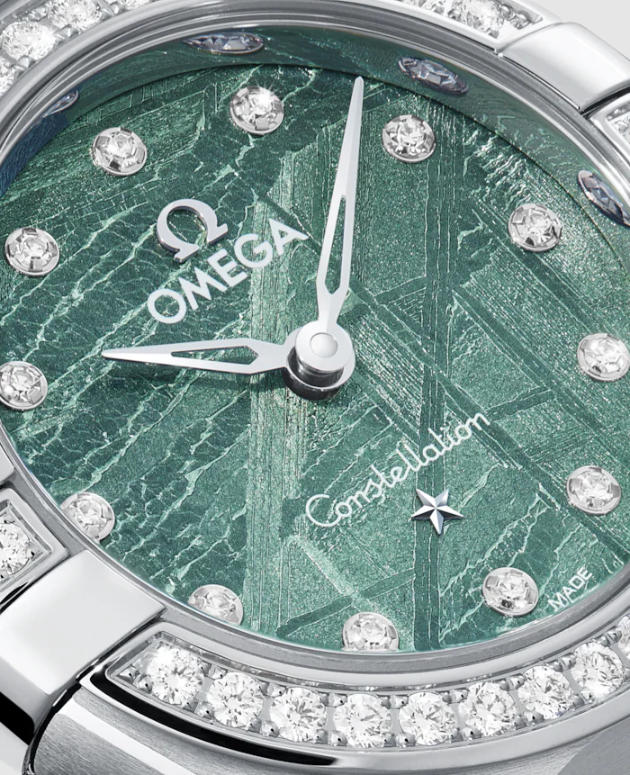
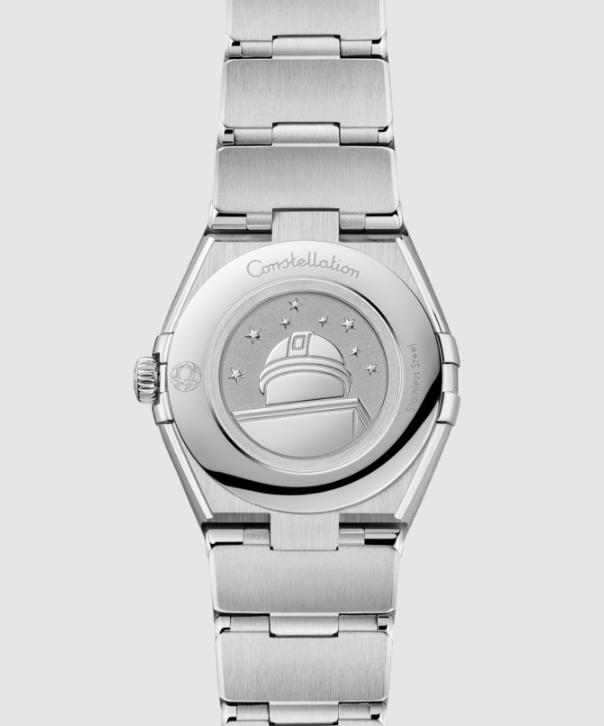
The collection is split between 25mm, 28mm and 29mm cases. Those numbers are close on paper, but the watches do not wear in the same way.The 25mm references are the most jewellery focused. The case takes up less space on the wrist, which naturally pushes more attention toward the bezel, bracelet and dial. The 28mm versions keep that compact feel but add a little more presence, while the 29mm models feel more like conventional watches rather than jewellery pieces with a movement inside.That difference becomes even clearer when the movements are considered. The 29mm watches use Omega’s automatic Calibre 8700, while the smaller 25mm and 28mm models use quartz movements. The result is not simply a choice between mechanical and quartz. It changes the entire character of the watch.The automatic version has more traditional watchmaking appeal. The movement can be viewed through the caseback, the watch includes a date display, and Master Chronometer certification gives it a stronger technical identity. The quartz models are simpler, but in this context simplicity makes sense. Smaller cases benefit from thinner, more compact movements, and many buyers choosing a watch of this size may care more about comfort and appearance than mechanical complexity.This is why the difference between a 25mm and 29mm Omega Constellation matters more than it might appear. It is not just about wrist size. One feels closer to jewellery, while the other feels much more like a small mechanical watch.
The Dial and Bracelet Do Most of the Visual Work
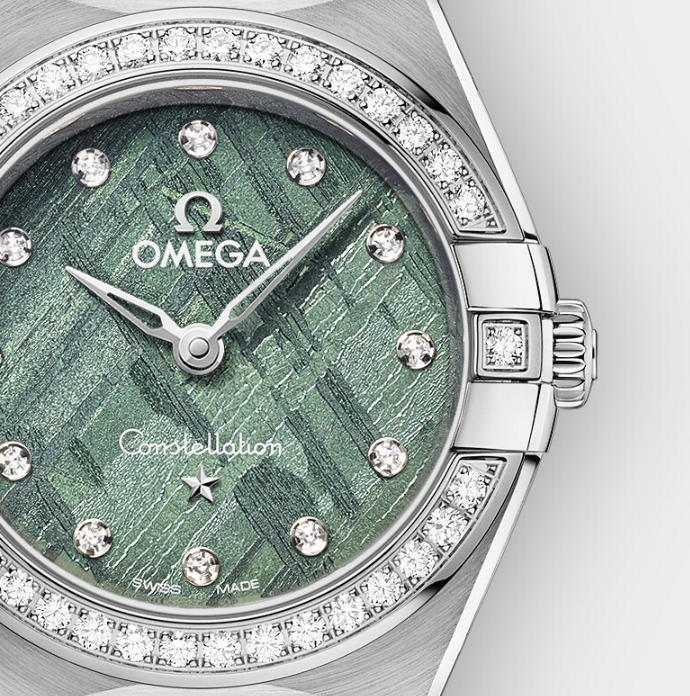
The strongest feature across the new collection is the dial. Omega has used a swirling pattern that spreads outward from the Constellation star at 6 o’clock, giving the surface more depth than a conventional flat sunburst finish.Most versions use electrochemical etching to create the pattern, while mother of pearl dials rely on laser engraving. That distinction matters because the effect depends on texture rather than print alone. When light moves across the surface, the pattern becomes part of the watch’s character instead of simply sitting underneath the hands.The colour choices also help separate the references from one another. Darker aubergine and green tones give the watches more presence, while silver and gold versions are quieter and more traditional. Diamond bezels and diamond hour markers push some references firmly toward jewellery territory without making the entire collection feel identical.For anyone comparing an original with a replica interpretation, Omega Constellation dial texture and diamond setting are two of the most revealing areas. A dial that looks too flat or stones that sit unevenly can change the whole appearance even if the case dimensions are close.The bracelet matters just as much. One of the defining features of the Constellation is the way the bracelet flows directly into the case. If that transition feels awkward, the watch immediately loses some of its character. On the genuine pieces, polished surfaces and mixed materials create a continuous visual line rather than making the bracelet look like a separate component.The familiar claws also deserve attention. They are small details, but they frame the bezel and give the case its identity. If the proportions are wrong or they sit too prominently, the entire watch can look heavier than it should.
Why This Collection Works Better Than It First Appears
It would be easy to look at these Constellations and assume that the automatic 29mm references are automatically the more desirable watches. That would miss the point of the collection.The smaller quartz models work because they are designed around different priorities. Their purpose is not to deliver the same mechanical experience in a smaller case. They are more about proportion, ease of wear and appearance. In that setting, quartz does not feel like a compromise so much as a practical choice.The 29mm models serve a different audience. They still have the polished, decorative feel of the wider collection, but the mechanical movement gives them more substance for buyers who want something beyond visual appeal.The result is a range that feels more varied than it first looks. The 25mm watches are the most jewellery like, the 28mm versions sit somewhere between jewellery and traditional watchmaking, and the 29mm models bring the strongest mechanical identity.Readers comparing the collection with other references can browse the Omega Constellation watches section to see how different versions of the design have evolved.What makes this collection interesting is not simply the number of references or the amount of decoration. It is the way Omega has used small changes in size, movement and dial treatment to create noticeably different personalities without abandoning the core Constellation design.For replica watch readers, that is also where the real challenge lies. This is not a watch that depends on one dramatic feature. The overall impression comes from a series of smaller details working together. The case size, the claws, the depth of the dial, the bracelet fit and the placement of the stones all need to feel balanced.That makes the Constellation a good example of why specification lists only tell part of the story. Two watches can have similar dimensions and materials on paper, yet look very different once the finishing and proportions are placed side by side.
About the Author
